Can preserved moss be repaired after minor damage?
Yes, preserved moss can often be repaired after minor damage, depending on the type of blemish and how long it has been there. Small dents, light fading, or a bit of dust are usually fixable at home with simple tools and a gentle hand. More serious issues like tearing, deep discoloration, or mold are harder to reverse and may require replacing a section. Understanding what caused the damage in the first place helps you decide whether a repair is worth attempting or if the piece needs professional attention.
What counts as minor damage on preserved moss?
Preserved moss is real moss that has been treated with a glycerin-based solution to replace its natural moisture. This keeps it soft, colorful, and long-lasting without needing water or soil. Because it is still a natural material, it can be affected by its surroundings. Minor damage usually falls into a few categories:
- Surface dust and debris, the most common issue, especially if the moss is on a wall or shelf where dust settles over weeks.
- Light fading or color shifts, prolonged exposure to direct sunlight can cause the dye to fade, leaving pale patches.
- Slight flattening or indentation, from something pressing against the moss, like furniture or a picture frame.
- Small tears or loose pieces, often from handling or accidental bumps.
- Dry or brittle tips, if the indoor environment is very dry, the tips of the moss may become crisp.
Each of these problems has a reasonable chance of being fixed without replacing the entire panel or arrangement.
How to clean and refresh preserved moss
For surface dust, the simplest fix is a soft brush. A clean, dry makeup brush or a soft paintbrush works well. Gently sweep across the moss in the direction of the growth. Avoid pressing hard, as preserved moss can be delicate when dry. For deeper dust that has settled into crevices, you can use a hairdryer on the cool, low setting. Hold it a few inches away and let the airflow lift the dust out. Do not use heat, which can dry out the moss further.
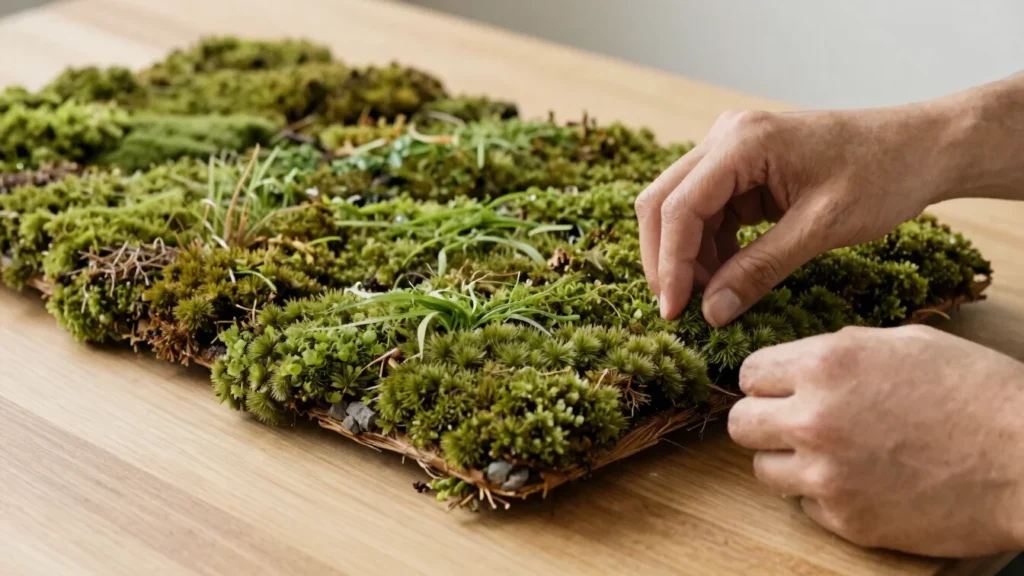
If the moss has picked up a stain or sticky residue, try a very slightly damp cloth. Dampen a microfiber cloth with distilled water, wring it out thoroughly so it is only barely moist, and dab the affected area. Do not rub, as that can break the moss fibers. Afterward, let the area air dry completely before touching it again. Water should never be used in large amounts, because preserved moss does not tolerate soaking.
Restoring color and softness
Fading from direct sunlight is one of the harder issues to reverse. If the color loss is recent and the moss has not become brittle, you can sometimes refresh the color with a glycerin-based moss dye or a tinted preservation spray. These products are sold at craft stores or online specifically for preserved moss. Test on a small hidden spot first. Apply sparingly with a spray bottle or a small brush, and allow it to dry for 24 hours. The color may deepen slightly as it absorbs.
For dry or brittle tips, a light misting with a glycerin-and-water solution can help. Mix one part glycerin with two parts distilled water in a spray bottle, mist very lightly, and let the moss rest. Do not saturate it. The glycerin draws moisture back into the fibers and restores some flexibility. This works best if the moss is only slightly dry, not fully crispy. If the tips are completely dead, they will not revive, but you can trim them carefully with small scissors.
Fixing flattened or indented areas
If a section of moss has been pressed flat, you can often fluff it back up. Use your fingers or a soft brush to gently lift the fibers. For stubborn indentations, hold a steam iron a few inches away from the moss (never touching it) and let the steam soften the fibers. Then fluff again. Be very cautious with steam: too much moisture can cause the preservation treatment to weep out, leaving sticky spots. Work in short bursts and let the moss cool between attempts.
For small tears, a dab of clear craft glue or hot glue on the back of the loose piece can reattach it. Press the piece gently into place and hold it for a few seconds. If the tear is in a visible area, you can camouflage it by blending in a small clump of matching preserved moss from a scrap piece or a kit. Glue that clump over the tear and trim it to match the surrounding texture.
When repair is not the answer
Some damage is beyond a simple fix. If the moss has developed mold or mildew, the preservation treatment has failed in that spot. Mold usually appears as dark patches or a musty smell. Preserved moss should not grow mold under normal conditions; if it does, the problem is usually high humidity or a spill that was not cleaned. Cutting out the affected section and replacing it with fresh preserved moss is the only reliable solution. Trying to clean mold off preserved moss rarely works and can spread the spores.
Large tears that run across the whole panel or deep gouges that expose the backing board are also hard to repair invisibly. In those cases, it is often easier to replace the damaged section with a new piece from a kit or a custom cut. If the moss was originally attached to a rigid backing, you may be able to remove the damaged portion and glue in a patch.
Color fading that has been happening for months or years is usually permanent. The dye has broken down from UV exposure, and no amount of spraying will bring back the original shade. The only option is to replace the faded section or to treat the whole panel with a new dye layer, which is a more involved project.
Preventing future damage to preserved moss
Repair is useful, but preventing damage in the first place is easier. Keep preserved moss out of direct sunlight. A spot near a window that gets morning sun for an hour or two is usually fine, but all-day direct light will cause fading. Avoid placing moss near heating vents, radiators, or air conditioning units, as rapid temperature changes and dry airflow can make it brittle. Home humidity levels between 40% and 60% are ideal. If your space is very dry, a small humidifier nearby can help maintain the moss's flexibility.
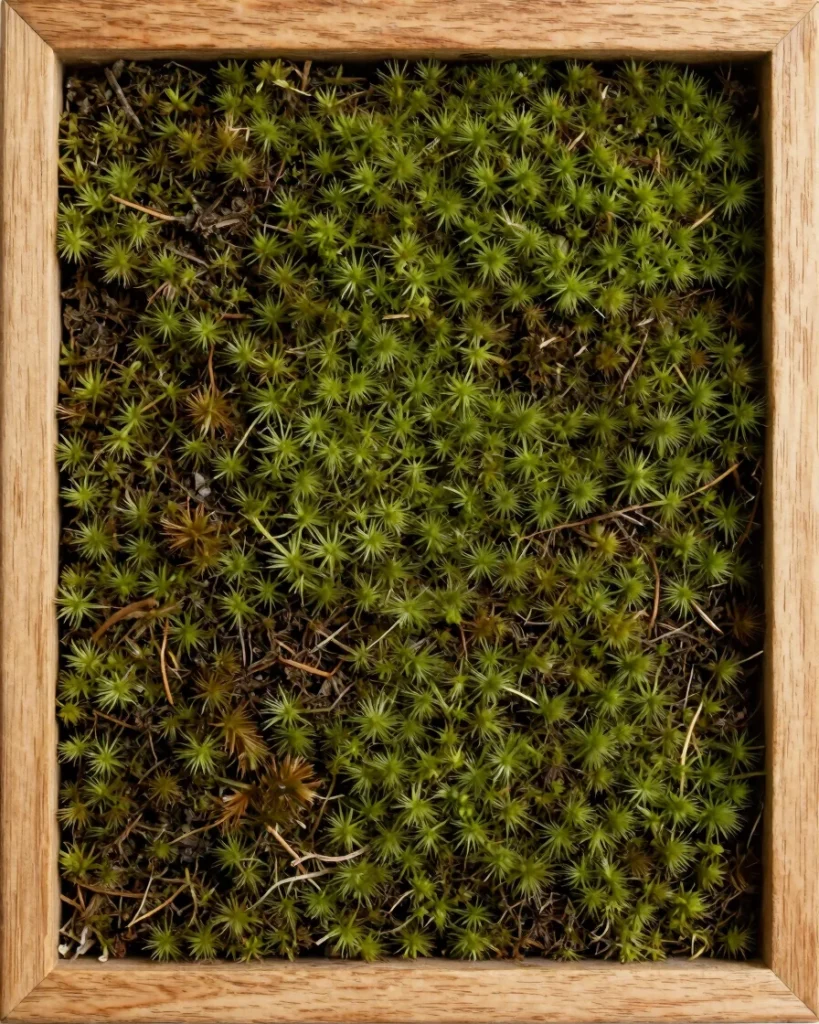
Dust the moss every couple of weeks with a soft brush or a cool hairdryer. This prevents dust from building up and embedding into the fibers. If you have pets or children who might bump the moss, consider mounting it slightly out of reach or behind a protective frame. A simple frame with a glass front can shield the moss from accidental contact while still letting you see the texture.

When moving or storing preserved moss, wrap it in acid-free tissue paper and place it in a sturdy box. Do not stack heavy items on top of it. If the moss is part of a larger wall arrangement, check the mounting hardware periodically to make sure it is secure. A fallen panel can cause tears that are hard to repair.
Final practical tips
Preserved moss is more resilient than many people expect. With a little care, a minor blemish does not mean the end of your piece. A soft brush, a cool hairdryer, and a small bottle of glycerin can handle most everyday issues. If the damage is deeper, a patch or a dye refresh can extend the life of the moss by years. The key is to catch problems early, before they spread or become permanent. A well-maintained preserved moss display can stay beautiful for many seasons, and a simple repair now can save you from having to replace the whole thing later. Keeping a few basic supplies on hand at Home makes it easy to address small issues as they arise, so your indoor moss decor stays fresh and inviting without much fuss.